
Courage is a request: how an unanswered message became an award final
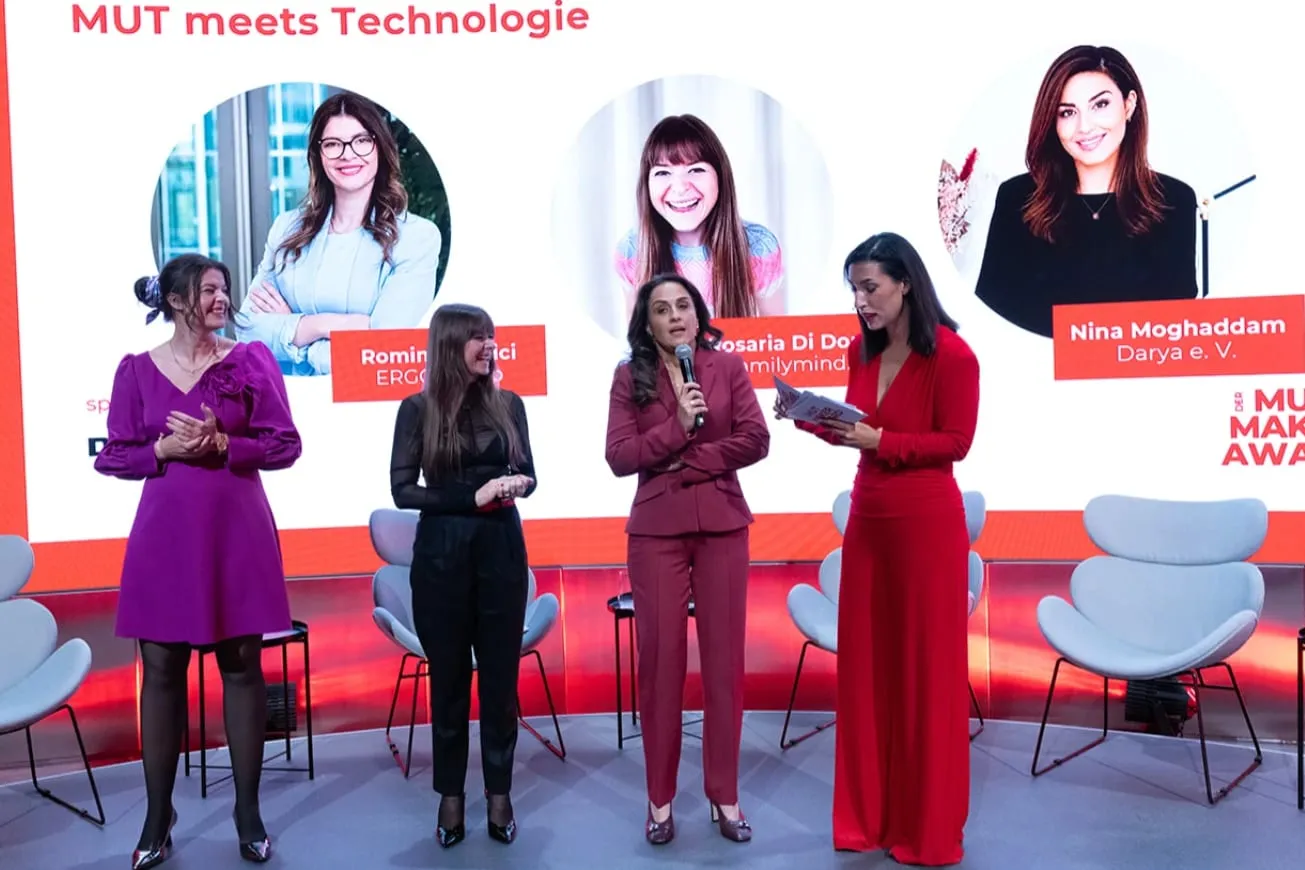
A few years ago I was walking through the Englischer Garten in Munich, next to a friend pushing her little one in a pram, and I said a sentence I still remember today:
“Oh no, Tijen Onaran isn’t a fit for us.”
I have rarely been so thoroughly wrong.
The detour starts on a dance floor
The story starts much earlier, in the kind of place where stories begin that you don’t know are stories while you are living them.
Thursday night, Mannheim, the inner courtyard of the palace. The Schneckenhof. From nine o’clock the courtyard fills up: smoke machines, bass bouncing off baroque walls, three thousand people between cocktail stands and cobblestones, organised by student societies who have kept it going since the seventies. Seven Thursdays a semester, and you went to all seven.
And because Heidelberg and Mannheim are less than twenty minutes apart by train, it was never just one city. You went over, you knew the faces, you ended up on the same dance floors. Tijen was studying in Heidelberg in those years. I was the student on the Schneckenhof.
We crossed paths there the way you cross paths at twenty-two: no notes, no business cards, not the slightest idea that it would ever matter. You never know which door is a door. You just walk through quite a lot of them.
The moment I asked
In March this year I sat one evening in front of an empty LinkedIn message. familymind had been in the app stores since Christmas, we were growing, and we needed people who would believe in us early. I wanted one particular person on our side.
So I wrote to her. I started with the Schneckenhof, because it was true and because it was silly. I explained why nobody builds AI for the most complex system of all: the family. I wrote why this isn’t a niche topic but one of the biggest reasons women step away from their careers.
And then I wrote the sentence I am proudest of in hindsight:
If you’re not the right person: do you know someone who is?
That is the whole trick. A request that leaves the other person a door to walk through is no longer an imposition. It becomes an offer.
Then I pressed send, put my phone away and felt a little embarrassed.
And then: nothing
She didn’t reply. Not the next day, not the week after, not in April. I opened the conversation a few more times, the way you do, and at some point I stopped opening it.
I don’t want to sugarcoat it. It feels awful. You don’t write a message like that in passing. You weigh every sentence, you delete the word “maybe” three times, you press send as if you were jumping. And then simply nothing happens, and the nothing is louder than a no. A no you can place. Silence you have to sit with.
So I kept going. Not heroically, but because it was Tuesday and the app doesn’t get better on its own.
Five months later, an email arrived
familymind was in the top 3 of the Mut Maker Award 2026, in the category Mut meets Technology, out of around 500 submissions. The award is run by Global Digital Women and The Onaran Company. So, by her.
When the email arrived, I read it three times. Then I called Mousa, and for a moment neither of us said anything.
What I learned
Not: networking pays off. Everyone knows that, and it helps no one.
But this: I had no idea which door was which. For years I had considered someone a poor fit whose award would later put me among the final three out of 500. I took a dance floor for a dance floor. And I wrote a message I thought would lead to an investment. It led to no investment at all, and still changed everything.
The request wasn’t wasted just because it went unanswered. That is the part I wish I had told myself five years ago: you can’t control the answer. You can only control whether you ask. And a question nobody answers is still out in the world.
Sometimes detours lead to the destination. But only if you take them.
Why courage is the right word
For me, courage doesn’t mean having no fear. Courage meant leaving Microsoft after seven years because combining work and family no longer worked for me there. Building a product for work nobody sees, work that for a long time didn’t even have a name. Carrying on, even though we failed often enough.
But honestly? The most courageous thing I did this year was a LinkedIn message to a woman I once claimed wasn’t a fit for us. And the second most courageous thing was asking her whether I could tell this story.
You don’t become courageous by doing big things. You become courageous by asking small things that might make you look foolish.
Courage is rarely loud. Most of the time it is a request you could just as easily not have made.
Why now
Because AI is arriving in family life right now, and right now it is being decided what it will be used for there. For yet another app someone has to type everything into. Or for the layer underneath: thinking ahead, remembering, following up. The work that is on no list and still makes someone tired.
Whoever thinks of everything in your home knows this work. It is on no plan, it never comes up at dinner, and that is exactly why it weighs so much.
How it ended
On 29 October I stood at BMW Welt in Munich as one of three finalists in the category Mut meets Technology. Nina Moghaddam won, and I congratulated her with all my heart.
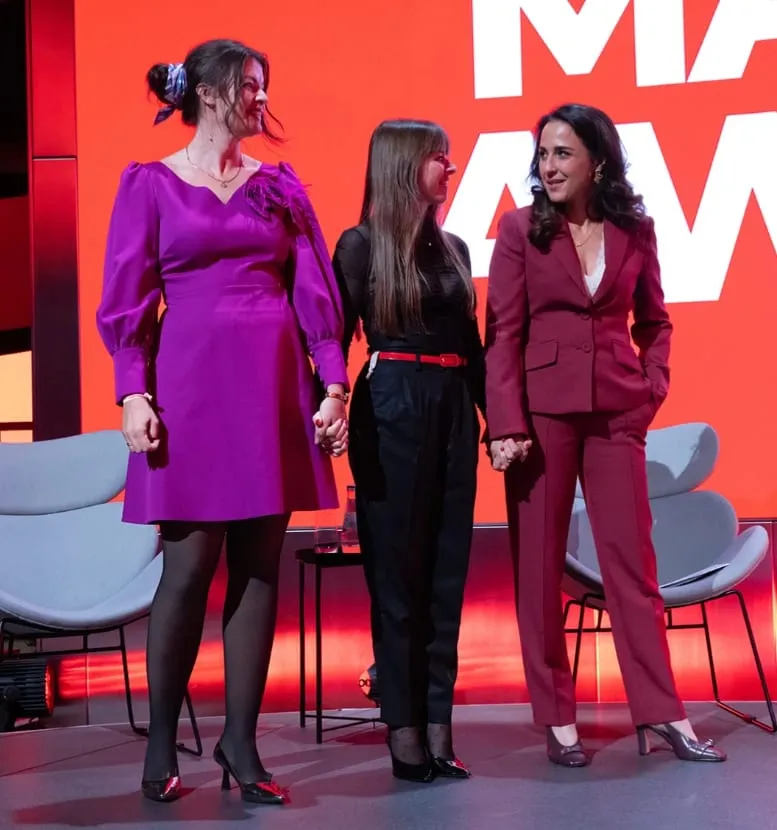
Photos: Andrea Heinsohn
On the way home I realised I didn’t feel like someone who had lost. This story was never about winning, it was about asking. A message that never got an answer brought me onto a stage I never expected to stand on. And the topic we stood there for, the invisible work in families, was visible to everyone in the room for a few minutes that evening. That a jury put it among the final three out of 500 says one thing above all: the topic has arrived.
This final doesn’t belong to me alone. It belongs to Mousa, to our team, to our families, and honestly to everyone who is waiting right now for an answer that doesn’t come, and keeps going anyway.
How is the mental load shared in your home? The test takes two minutes: familymind.ai/mental-load-score
Further reading
-
The Mental Load Shift goes to work: our pilot with Merz Lifecare
Rosaria Di Donna 3 min read Nov 2026 -
The familymind web app is here, and it changes everything
Rosaria Di Donna 6 min read Oct 2026  Company News
Third place at Radio Gong: Munich voted for families
familymind finished third of 20 startups in Radio Gong's 100,000 euro contest, and all of the top three were ideas for families.